Carrom
Inclusive of all taxes · Free shipping across India
Pickup currently unavailable
I am a carrom board.
You probably know what to do with me. We just changed what I’m made of.
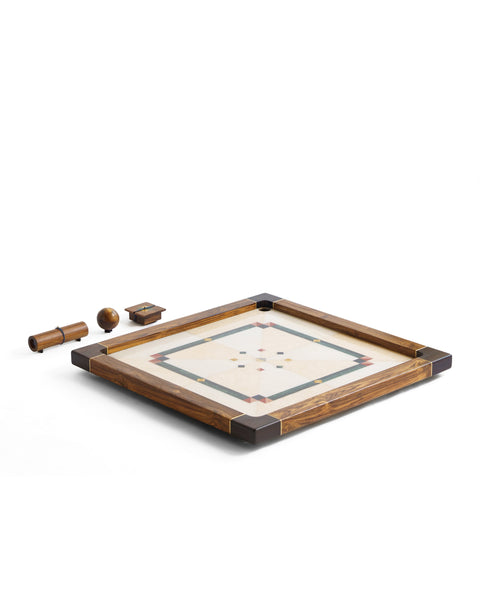
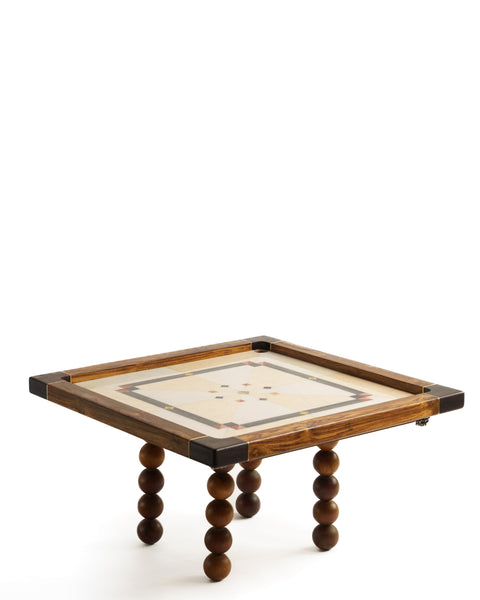
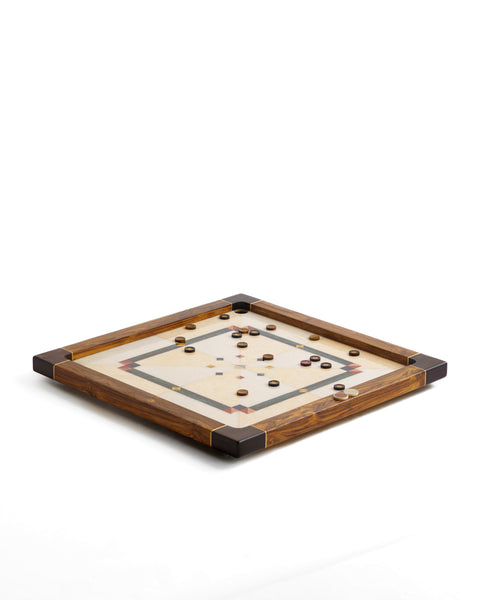
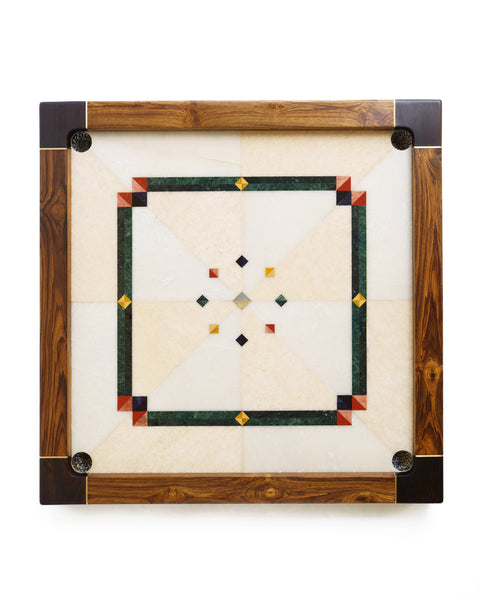
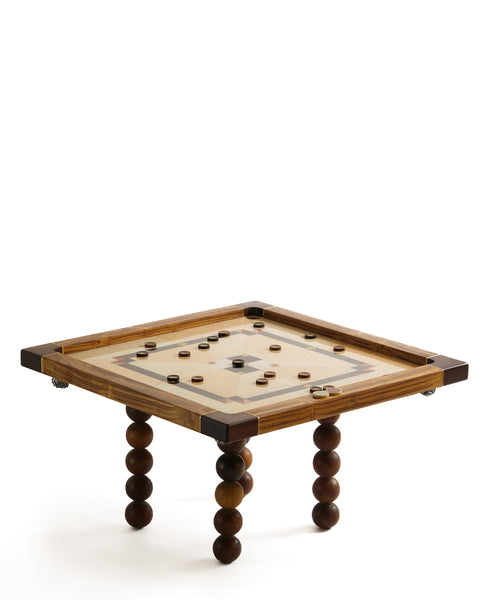
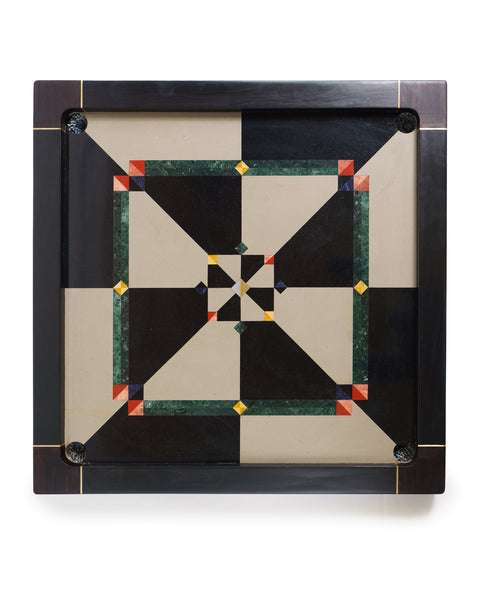
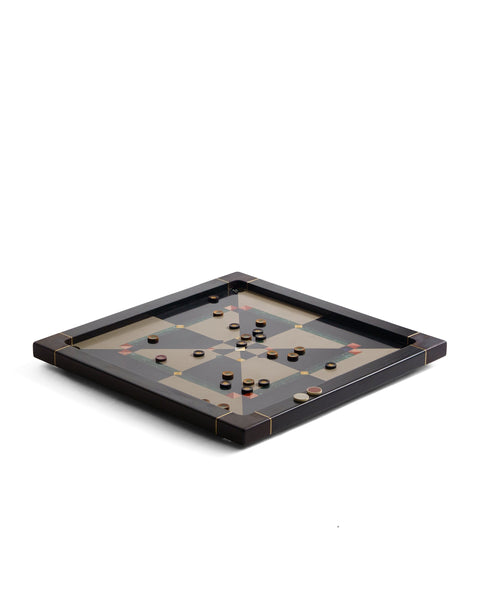
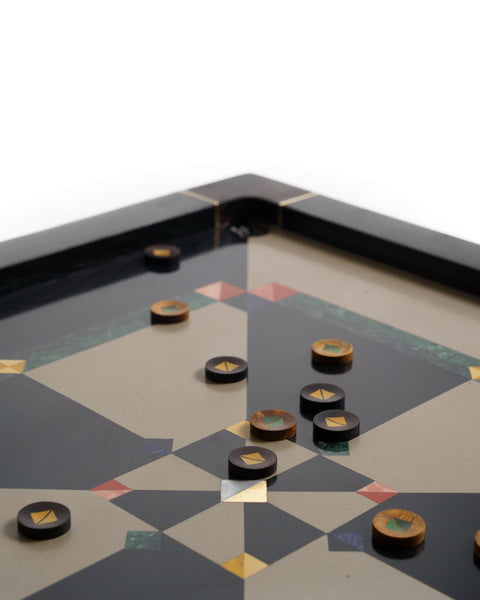
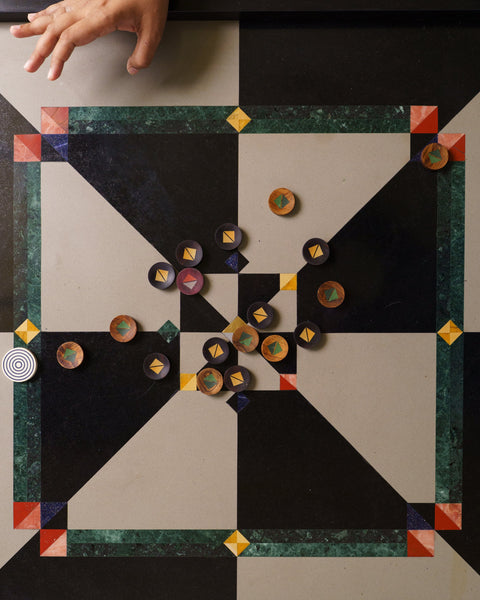
The familiar geometry of the game becomes a composition of stone, wood and colour — triangles, squares, lines and little interruptions that only really make sense once you start playing.
The board is still a board, and the game is still the game. Everything around it has been reconsidered.
Creator’s Notes
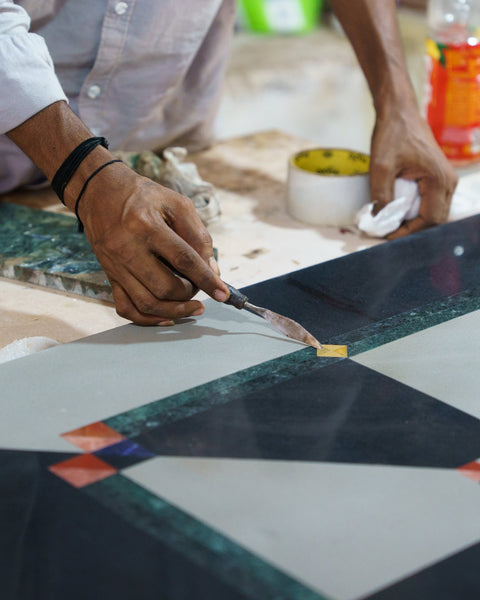
We started with something completely familiar: the carrom board. We didn’t redesign the game. Instead we looked at the visual language it already has, its geometry, markings, symmetry and pieces, and rebuilt those elements in SHED’s materials.
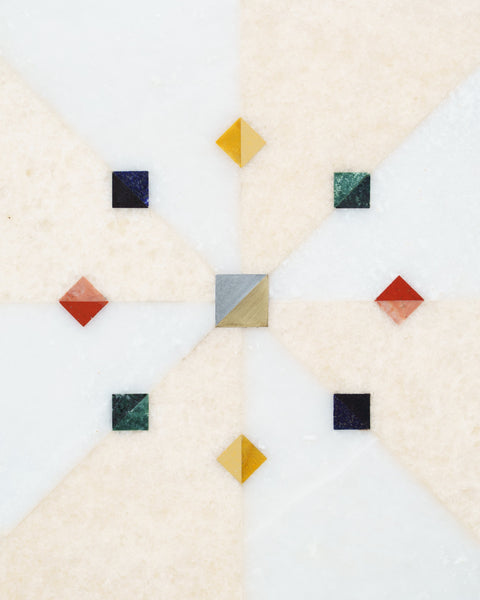
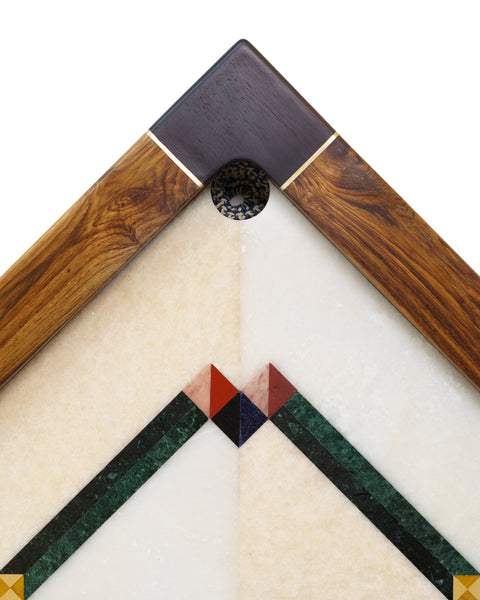
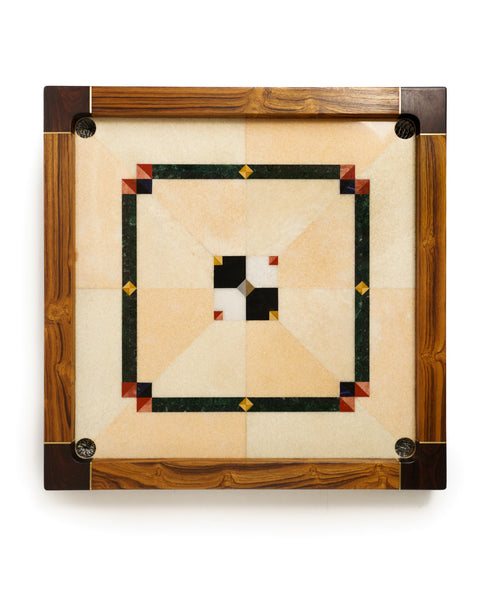
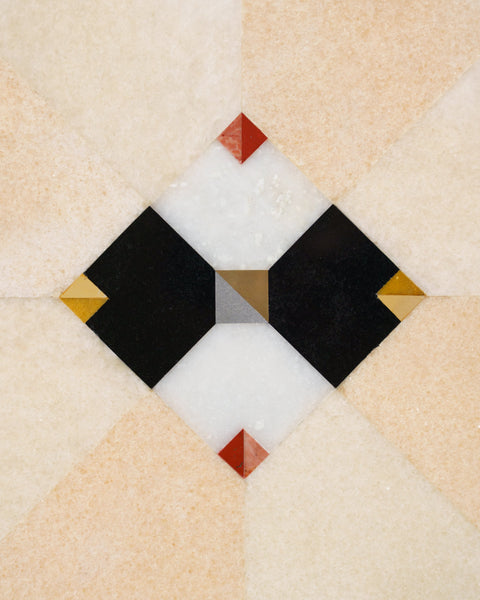
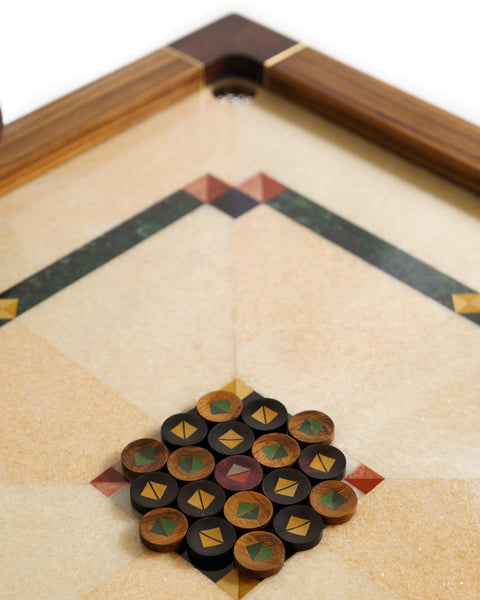
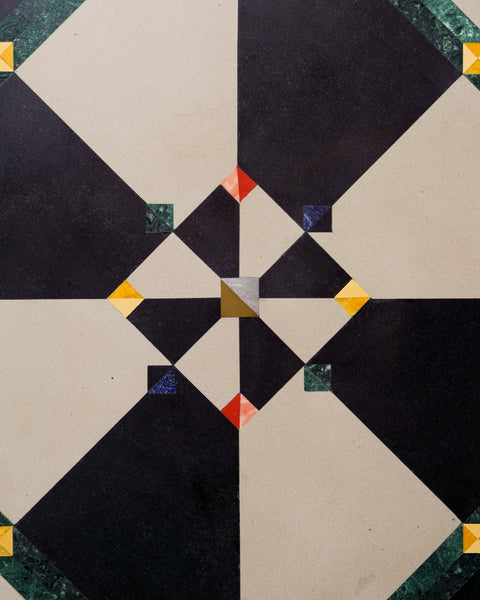
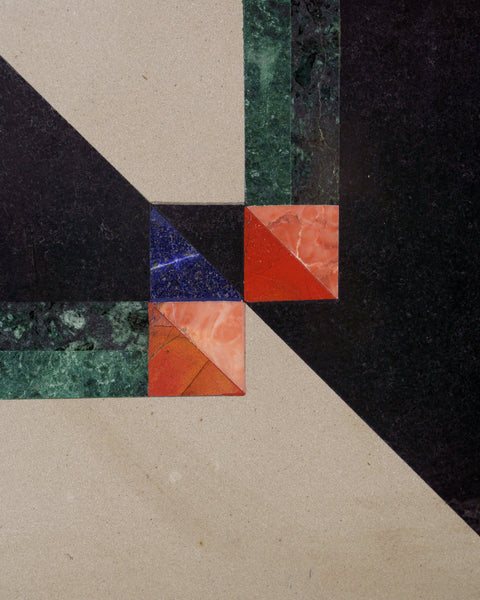
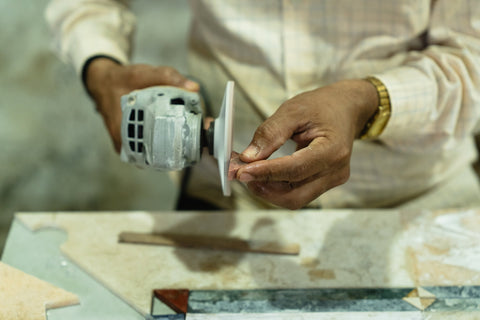
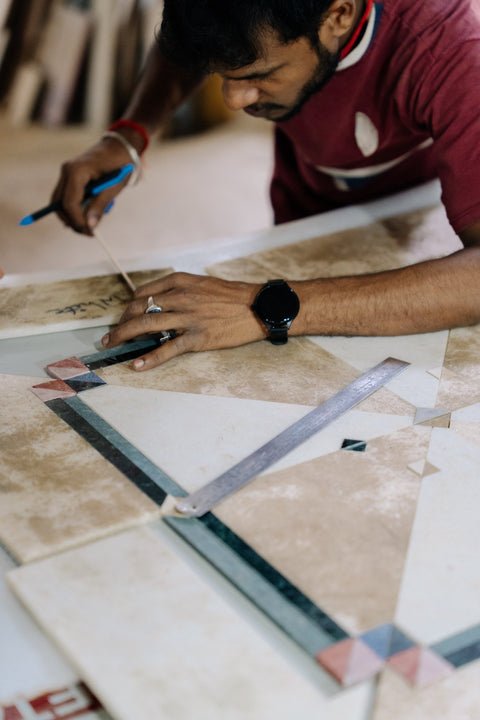
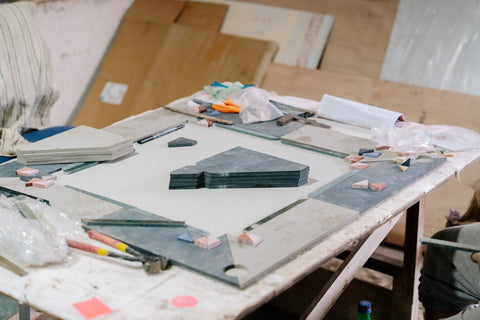
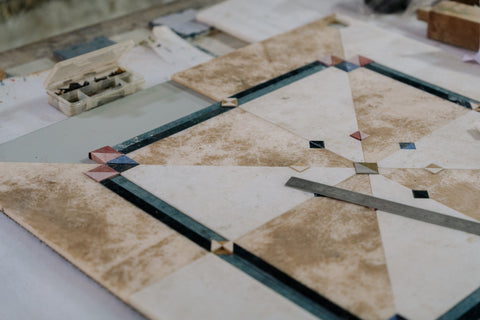
The board is stone marquetry, with each piece waterjet-cut and set by hand. We used several shades of the same colour side by side, light against dark, so the surface gains depth without any added ornament. The yellows are layered so they catch the light like gold. Greens shift from one tone to the next, and the blacks and blues sit close enough to read as one deep colour until you look again. It’s a pastiche of colours we love, expressed in stone with as few gestures as possible.
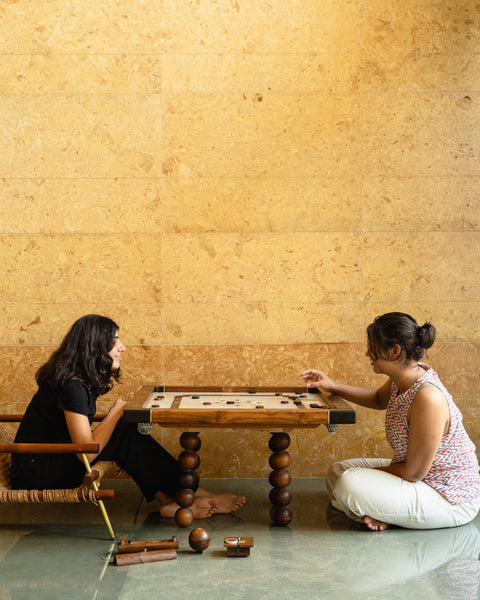
Carrom boards are usually loud, opulent and full of personality. This one is stripped back on purpose, so it can sit just as easily in a living room, a studio or a corner that needs livening up as on a games table.
Materials and parts
The board
Base in stone inlay for colourway 1:
White Makrana marble, beige Makrana marble, light green Kesariyaji marble, dark green Kesariyaji marble, Ghazni stone, red jasper, sodalite, black Kadappa stone, yellow jasper, yellow agate, brass, aluminium
Base in stone inlay for colourway 2:
Orange Makrana marble, beige Makrana marble, white Makrana marble, light green Kesariyaji marble, dark green Kesariyaji marble, Ghazni stone, red jasper, sodalite, black Kadappa stone, yellow jasper, yellow agate, brass, aluminium
Base in stone inlay for colourway 3:
Grey sandstone, black Kadappa stone, light green Kesariyaji marble, dark green Kesariyaji marble, Ghazni stone, red jasper, sodalite, yellow jasper, yellow agate, brass, aluminium
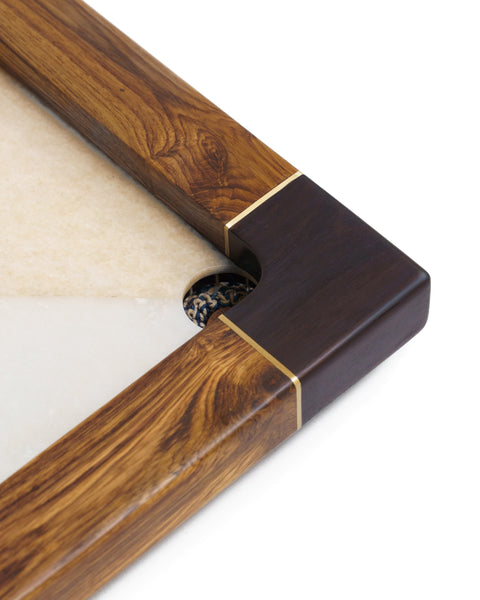
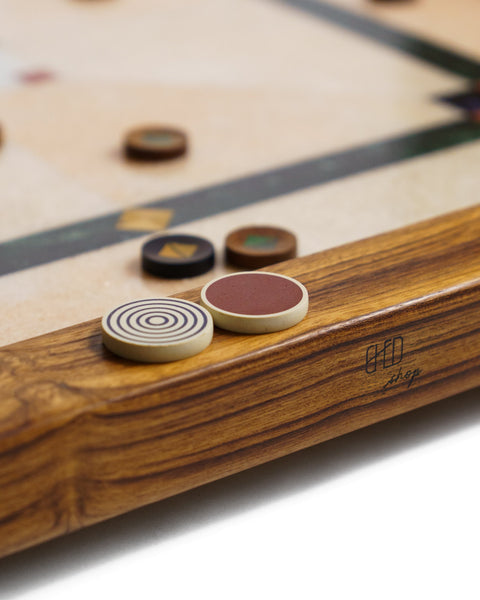
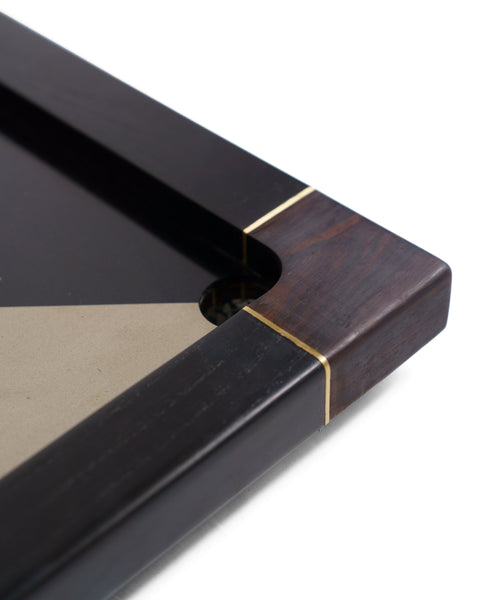
Wooden frame: shisham (Indian rosewood), teakwood, brass detail
Pockets: hand-knotted thin cotton rope, indigo-dyed and white
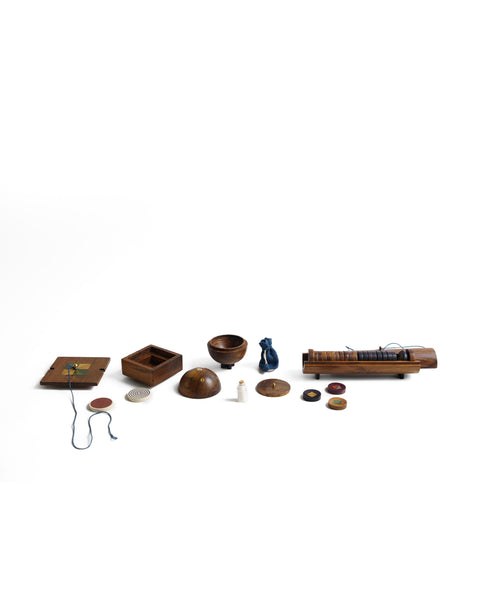
Counter box
Teakwood, shisham (Indian rosewood), brass, indigo-dyed thin cotton rope
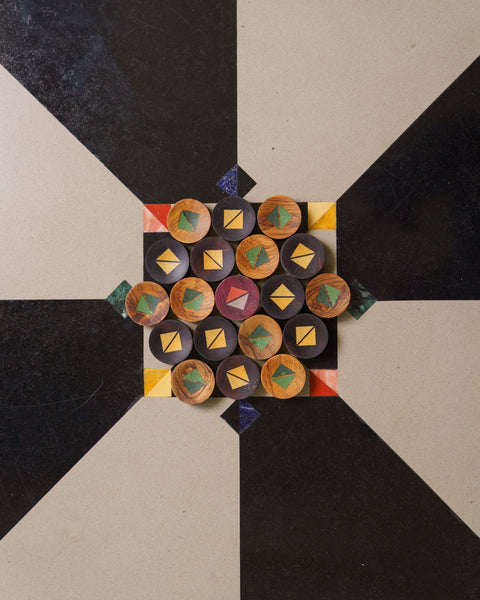
10+1 counters in Indian rosewood, 10+1 in teakwood, 1 queen in purpleheart wood
Striker box
Teakwood, shisham (Indian rosewood), brass, indigo-dyed thin cotton rope
2 strikers with pigment fill
Powder box
Teakwood, shisham (Indian rosewood), brass, glass bottle with aaraish powder, indigo-dyed fabric potli to dispense powder
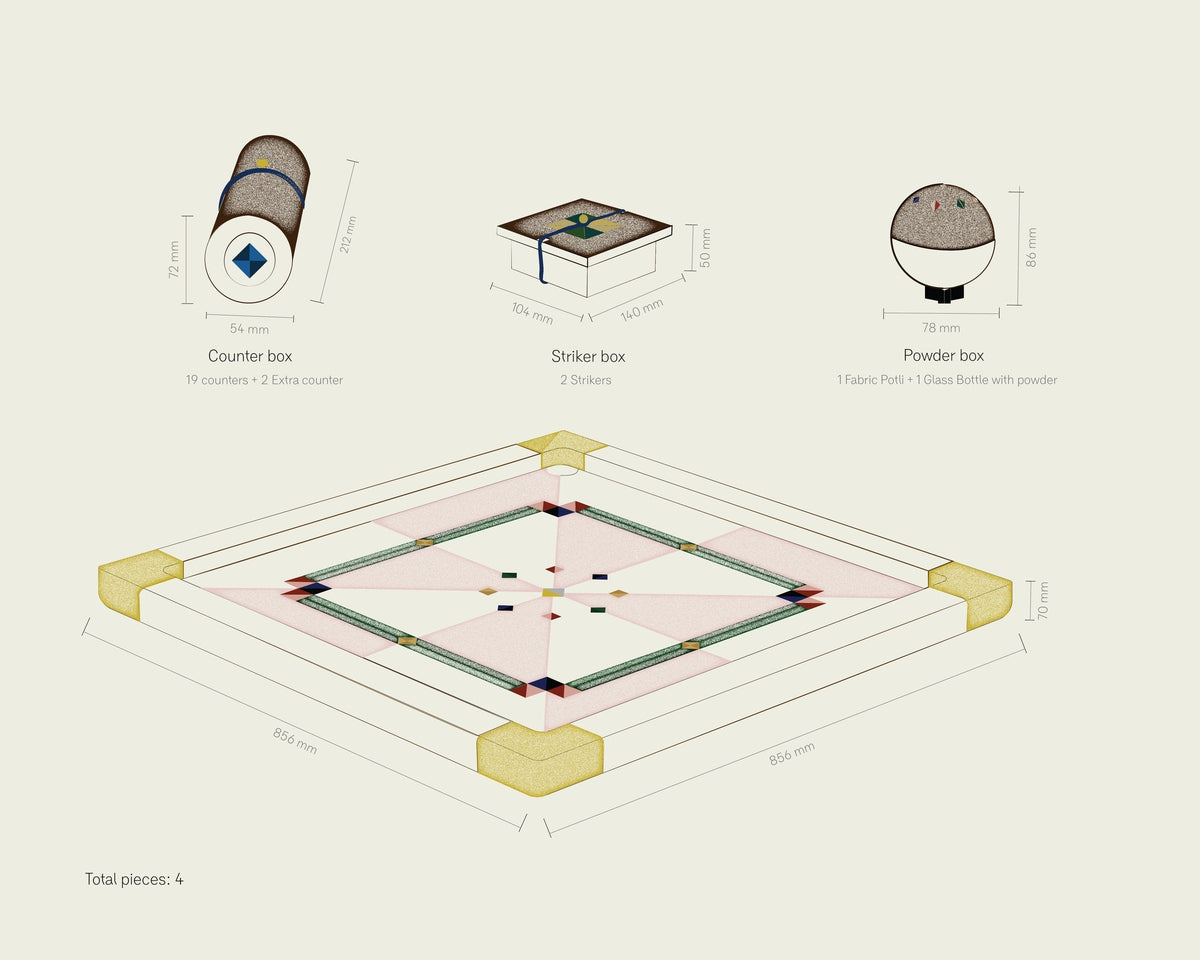
Dimensions (L × B × H)
The board: 856 × 856 × 70 mm
The counter box: 212 × 54 (dia) × 72 mm
The striker box: 104 × 104 × 50 mm
The powder box: 78 mm dia × 86 mm H
Total pieces
The board
Striker box: 2 strikers
Counter box: 21 counters + 2 extra counters
Powder box: 1 fabric potli, 1 glass bottle with powder
Instructions for use
I play like a regular carrom board, with the same rules and setup.
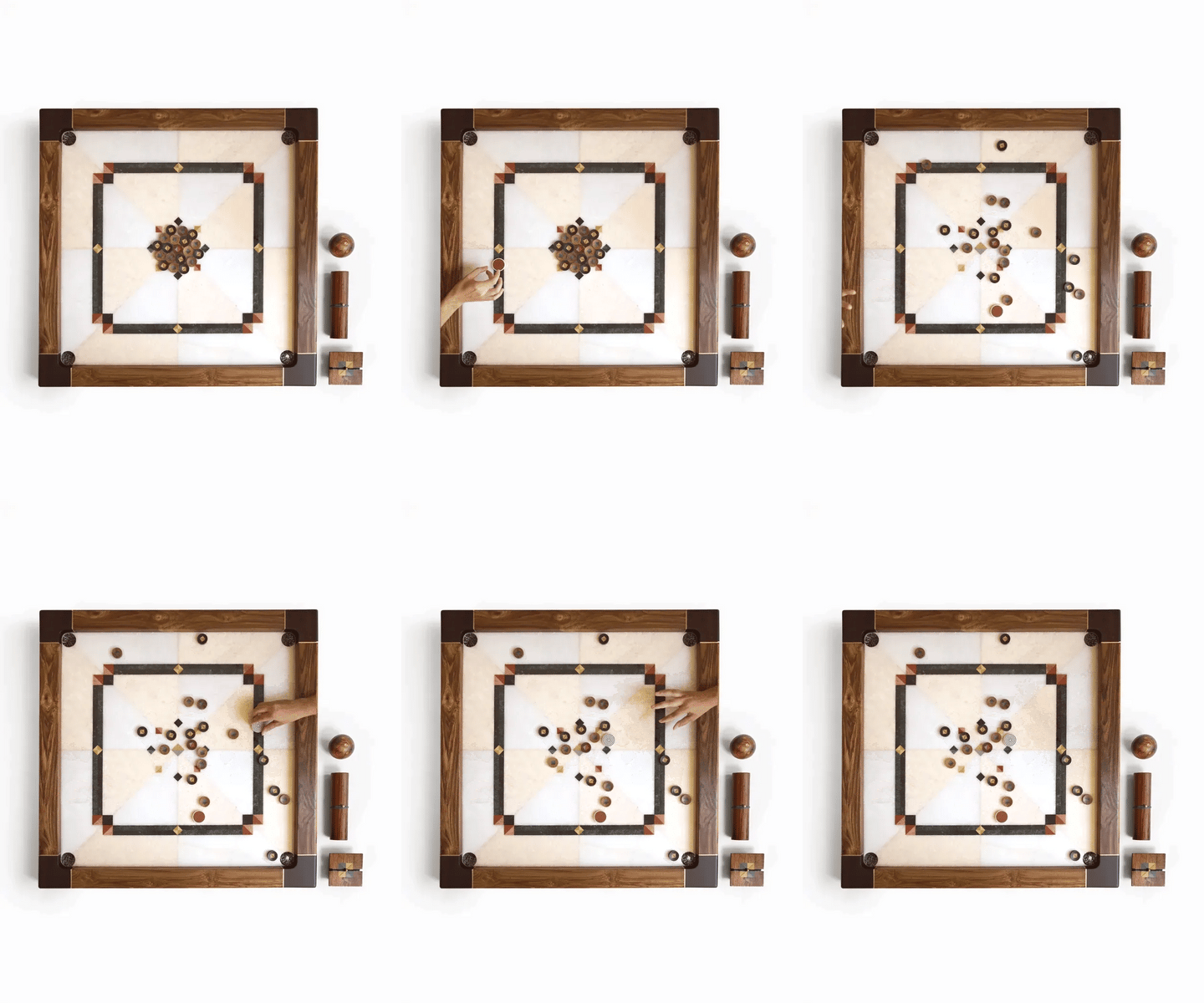
Add a light, even layer of carrom powder if needed, though I already glide more smoothly than a wooden board. Arrange the counters in a circle at the centre, aim for the pockets, and flick the striker.
When you’re done, collect the counters and striker, and wipe me gently with a soft, dry cloth.
Every piece is made by hand in our Surat studio and dispatched within 4 weeks. Free shipping across India.
We take as much care in packing our objects as we do in making them. Each piece is packed with hard felt and secured inside a sturdy GI box, inspired by traditional Angadiya boxes, keeping everything safely in place on its way to you.
Prices include all taxes. We currently deliver within India only.
Questions: shop@outoftheshed.in
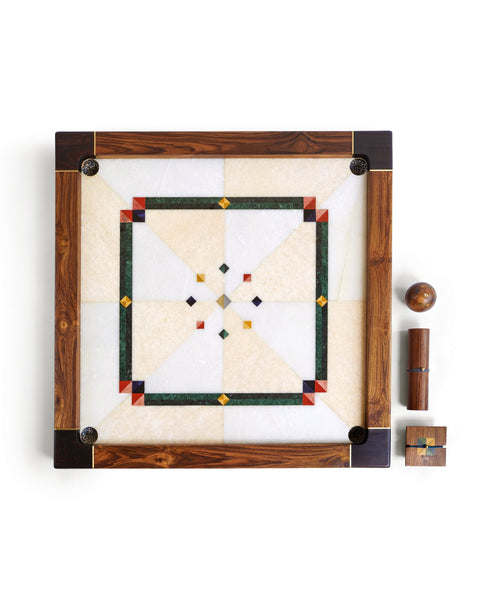
The board
Base in stone inlay for colourway 1:
White Makrana marble, beige Makrana marble, light green Kesariyaji marble, dark green Kesariyaji marble, Ghazni stone, red jasper, sodalite, black Kadappa stone, yellow jasper, yellow agate, brass, aluminium
Base in stone inlay for colourway 2:
Orange Makrana marble, beige Makrana marble, white Makrana marble, light green Kesariyaji marble, dark green Kesariyaji marble, Ghazni stone, red jasper, sodalite, black Kadappa stone, yellow jasper, yellow agate, brass, aluminium
Base in stone inlay for colourway 3:
Grey sandstone, black Kadappa stone, light green Kesariyaji marble, dark green Kesariyaji marble, Ghazni stone, red jasper, sodalite, yellow jasper, yellow agate, brass, aluminium
Wooden frame: shisham (Indian rosewood), teakwood, brass detail
Pockets: hand-knotted thin cotton rope, indigo-dyed and white
Counter box
Teakwood, shisham (Indian rosewood), brass, indigo-dyed thin cotton rope
10+1 counters in Indian rosewood, 10+1 in teakwood, 1 queen in purpleheart wood
Striker box
Teakwood, shisham (Indian rosewood), brass, indigo-dyed thin cotton rope
2 strikers with pigment fill
Powder box
Teakwood, shisham (Indian rosewood), brass, glass bottle with aaraish powder, indigo-dyed fabric potli to dispense powder
I play like a regular carrom board, with the same rules and setup.
Add a light, even layer of carrom powder if needed, though I already glide more smoothly than a wooden board. Arrange the counters in a circle at the centre, aim for the pockets, and flick the striker.
When you’re done, collect the counters and striker, and wipe me gently with a soft, dry cloth.
We started with something completely familiar: the carrom board. We didn’t redesign the game. Instead we looked at the visual language it already has, its geometry, markings, symmetry and pieces, and rebuilt those elements in SHED’s materials.
The board is stone marquetry, with each piece waterjet-cut and set by hand. We used several shades of the same colour side by side, light against dark, so the surface gains depth without any added ornament. The yellows are layered so they catch the light like gold. Greens shift from one tone to the next, and the blacks and blues sit close enough to read as one deep colour until you look again. It’s a pastiche of colours we love, expressed in stone with as few gestures as possible.
Carrom boards are usually loud, opulent and full of personality. This one is stripped back on purpose, so it can sit just as easily in a living room, a studio or a corner that needs livening up as on a games table.